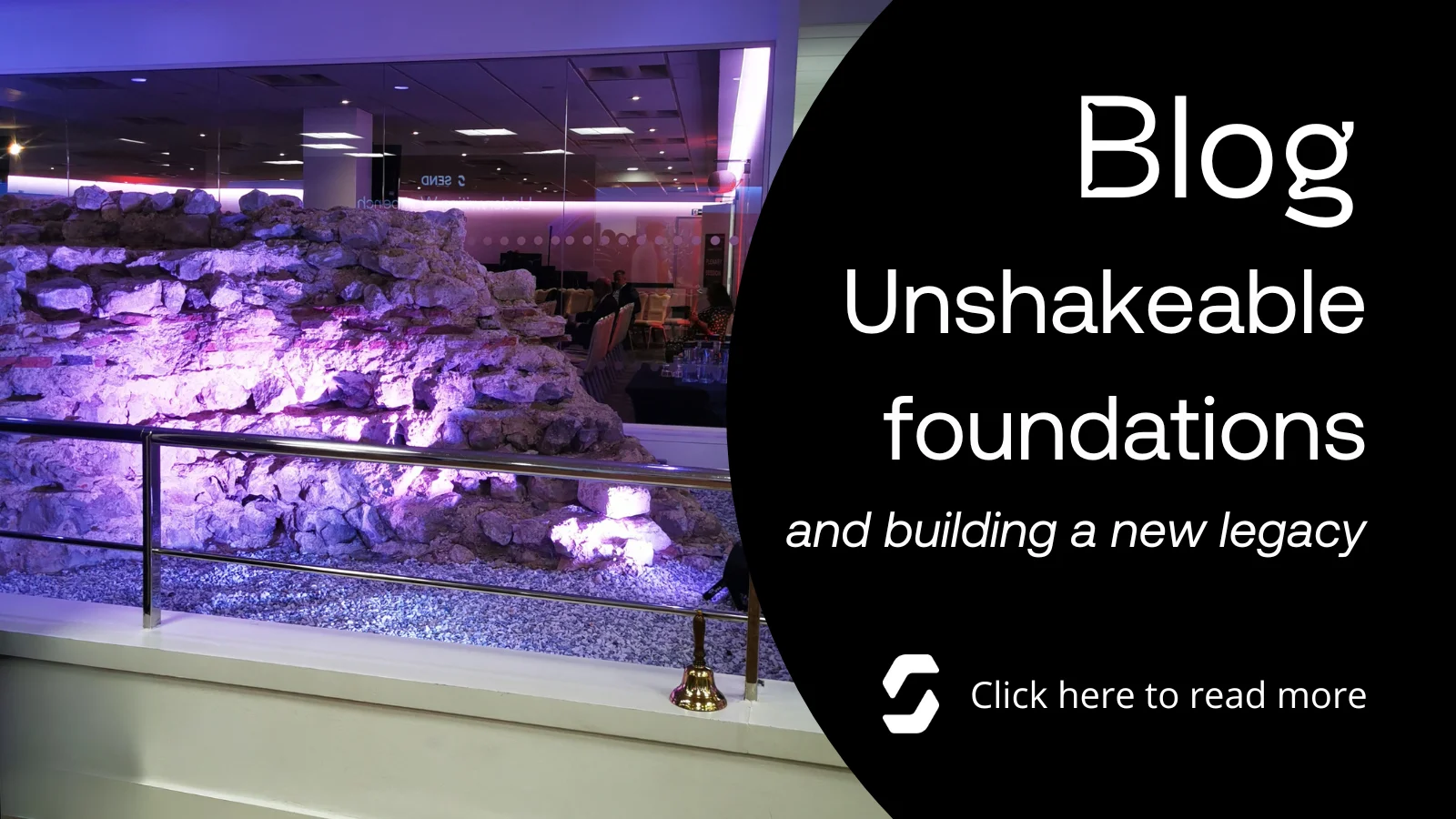
Unshakeable foundations and building a new legacy
The America Square conference venue is the perfect juxtaposition of old and new. The modern, brightly lit purpose-built space for meetings, conferences and events plays host to the remnants of the historical London Wall. Solid, immovable, and built to last, the London Wall was built around 200AD to defend the City of London against invading forces.
It was against the backdrop of this architecture that the Send team found itself earlier this month, presenting at the Underwriting Innovation Europe conference, and talking about the architecture that companies use.
An unshakeable legacy surrounded by all the bells and whistles of the modern conference space serves as a powerful analogy for the architectural challenges facing today’s insurers. The stone and mortar replaced by API’s and code.
Solid foundations
Every good structure needs solid foundations, but what happens when the world moves on and that foundation no longer serves its purpose?
This is the position many insurers now find themselves in. They have powerful, sturdy legacy systems, carrying decades of data and functionality, but in today’s market, the inflexibility of those structures no longer helps those businesses to grow. Much like the London Wall and the venue built around it, modern architecture must find ways to incorporate existing structures, whilst creating new functionality and the space to grow and respond to the changing market.
We’ve spoken before about the importance of ‘bionic architecture’. Bionic architecture is all about building flexibility into the foundations of an underwriting system. Considering how to plumb the building blocks together to create a holistic transformation journey that has scope to grow and adapt quickly to new requirements.
Ben spoke in his session about the importance of considering the wider business objectives before implementing new systems, and having a clear view of what you want to achieve. Though the Romans couldn’t possibly have foreseen the long-standing legacy of their craftsmanship, insurers can, and should build with a view to future change, this will be the key to success and maintaining a competitive edge in the market.
We may no longer be at war, but our insurers are battling market change and we need to provide the new, flexible architecture to help them to do it.
Contact Send to find out more about bionic architecture and how our Underwriting Workbench is built for change.
- Trends
- Industry Events
- Legacy Systems
Related Resources


Underwriting Resources
Underwriting Maturity Framework: Moving from a process-driven to a data-driven operating model
Top 10 insurance industry trends shaping underwriting in 2026
