Connect underwriting: From hours to seconds
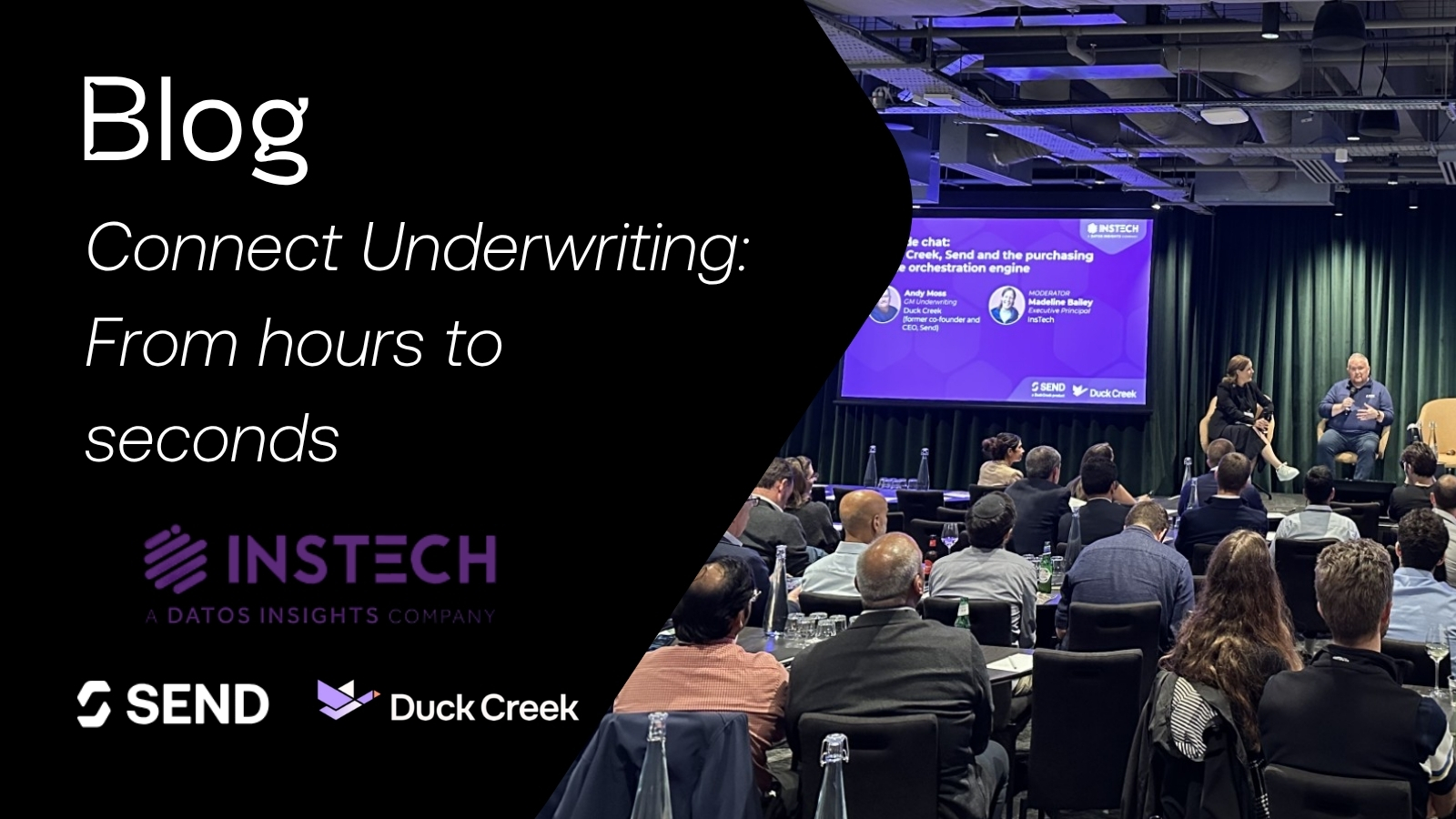
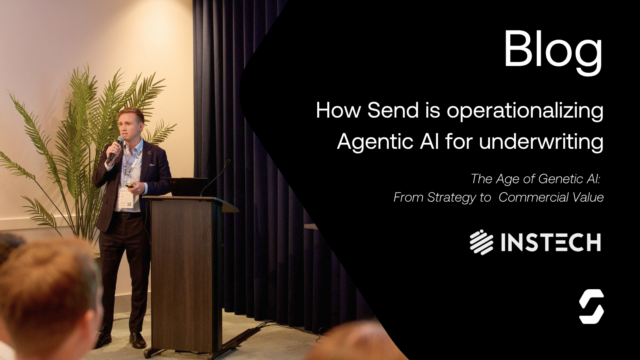
InsTech, Send, and Duck Creek brought together underwriting, operations and technology leaders London to discuss where underwriting orchestration creates real value.
Few insurers still need convincing that automation works. What most have instead is a set of capabilities that are not connected: a triage tool here, a rating model there, sanctions checked somewhere else, with underwriters navigating these different systems for each risk.
That was the problem in question at the Underwriting rewired event hosted with InsTech, Send, and Duck Creek last week. Across the evening, three themes kept coming back: buy the plumbing and build your differentiation, keep people accountable for the decisions that matter, and get data moving much faster than it does today.
The workbench has grown up
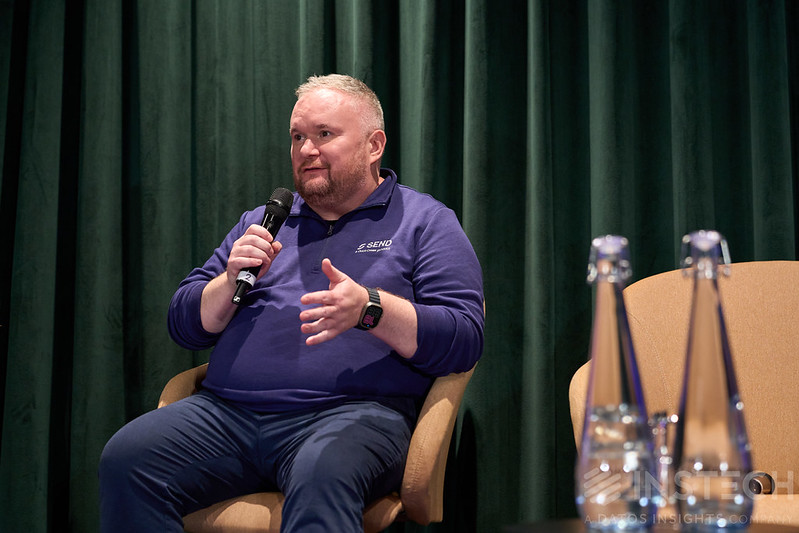
The underwriting workbench hasn't died so much as it has evolved. It started as a single pane of glass, but insurers and managing agents do similar work in very different ways – and those differences are often where their advantage sits. For Andy Moss, GM Underwriting at Duck Creek and co-founder of Send, that is where he sees the case for an orchestration engine: put the core plumbing in and let insurers configure the parts that differentiate them in the market.
It also explains why the prediction that AI would let every insurer build its own core systems isn't playing out at scale. Insurers are building what sets them apart, such as sharper risk selection and accurate decisions, not the pipes that move you across your underwriting lifecycle. And none of this works without good data.
That is where Duck Creek's acquisition of Send comes in. Policy, claims, and loss information sits downstream in the process, yet that is exactly what underwriters need at the point of decision and at renewal, and today it is hard to reach. Moving that data further upstream, from policy and claims platforms, is where Andy sees the industry heading.
Fireside: What comes after the pilot
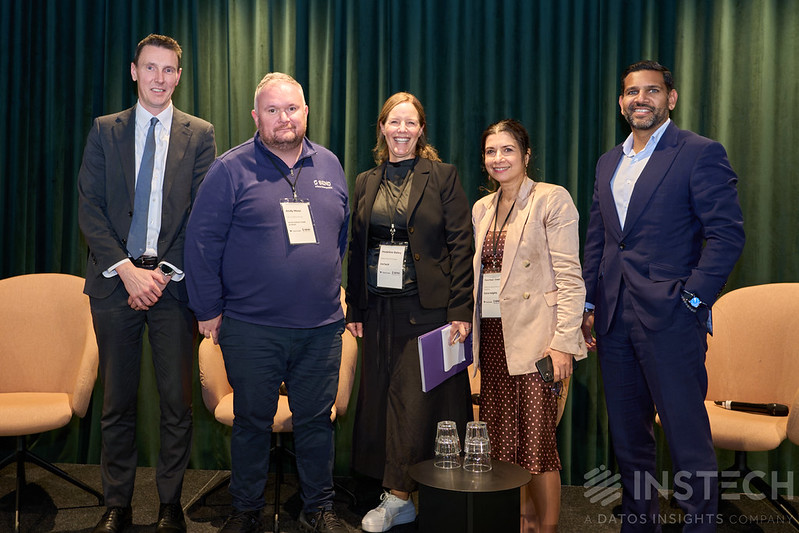
Parul Kaul-Green, Global Managing Director, Insurance at Datos Insights, opened with Datos research showing that most US carriers are past experimentation but stuck between governance and scale. She put the London view to three Send customers: Raoul Carlos, founder and CEO of Torch Underwriting; John Enright, CEO of Berkley Specialty London; and Jon O'Neill, Head of Data, Technology and Digital Transformation at Dale Underwriting Partners.
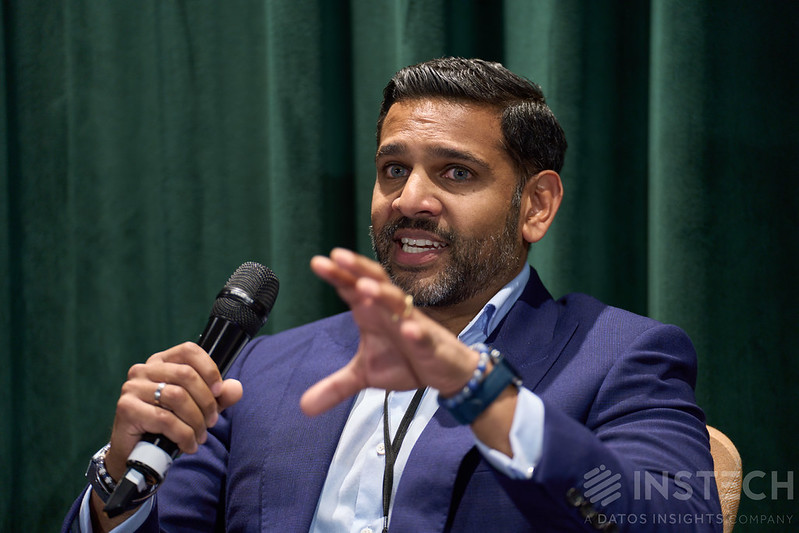
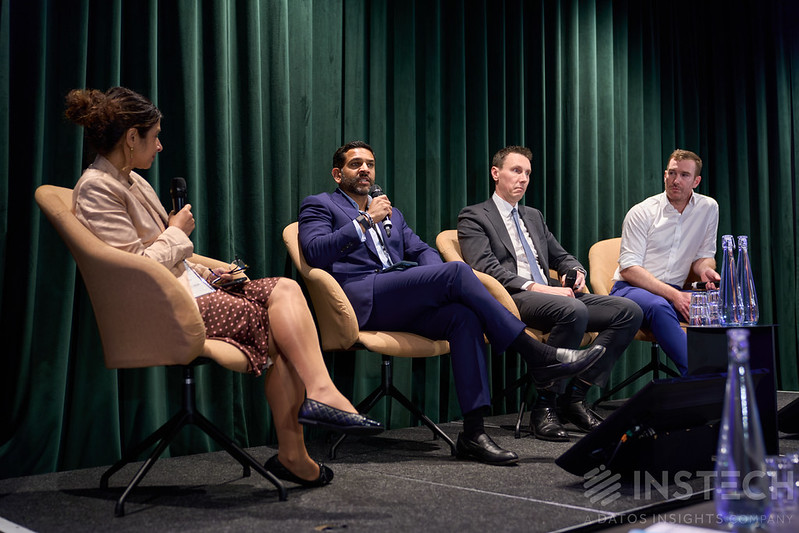
Mindset before machinery: "We rarely talk about legacy mindset," said Raoul, and without changing it, technology just speeds up the old way of working. Torch has focused on workflow automation to give underwriters time back, clear decision rights over where systems act and where a human stays in the loop, and intelligence by line of business.
Buy the commodity, keep the secret sauce: John put build versus buy through a return-on-equity lens. Any commodity that can be bought off the shelf at a sensible price should be. What stays in-house is the underwriting philosophy and the IP that make each insurer different.
The case for technology in a soft market: Jon summed up why underwriting technology matters more as rates fall. Anyone can make money in a hard market, but not everyone can make money in a soft market. When margins compress, operational efficiency becomes the difference between a combined ratio of 99 and 100 – between a good story and a bad one. Feedback loops matter even more. Imagine assuming a 10% rate reduction, only to discover six months later that it was 20%. By then, the chance to respond has gone.
Context is the moat: If frontier models put decision intelligence within reach of anyone with a budget, advantage still comes from context, said Raoul. What separates one insurer from another is the judgement of its underwriters, and for the first time that knowledge can be captured rather than walking out of the door. Jon added that how you deploy matters as much as the model: "We're not outsourcing capital-bearing decisions to the whims of a model version."
Governance that keeps pace: As AI moves into regulated work like triage and pricing, John set out three tests: a named person, not an agent, accountable for each decision; clear visibility of where AI is used across the organisation; and testing proportionate to how material the decision is. Nobody would put an IT system live without testing, he noted, yet parts of the market are doing just that with AI.”
The Hartford: from hours to seconds
The final session followed one use case with Daryn Upil, International Head of Technology at The Hartford, and Kate Bucukoglu, Product Owner, International, explaining how they took marine cargo quoting from hours to six seconds.
It started as a business problem, not a technology project. Brokers want faster responses whatever the complexity of the risk, yet underwriters were spending roughly the same time on a low-value risk as on a high-value one. The cargo team spotted the opportunity and led the work.
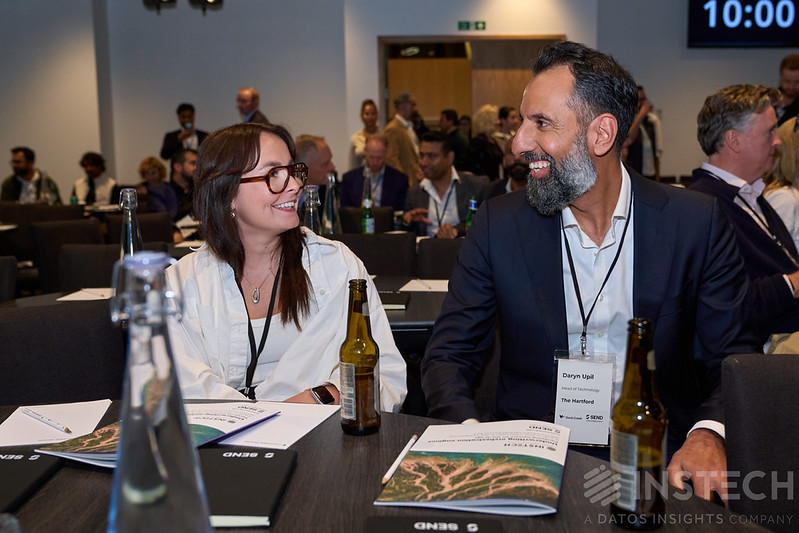
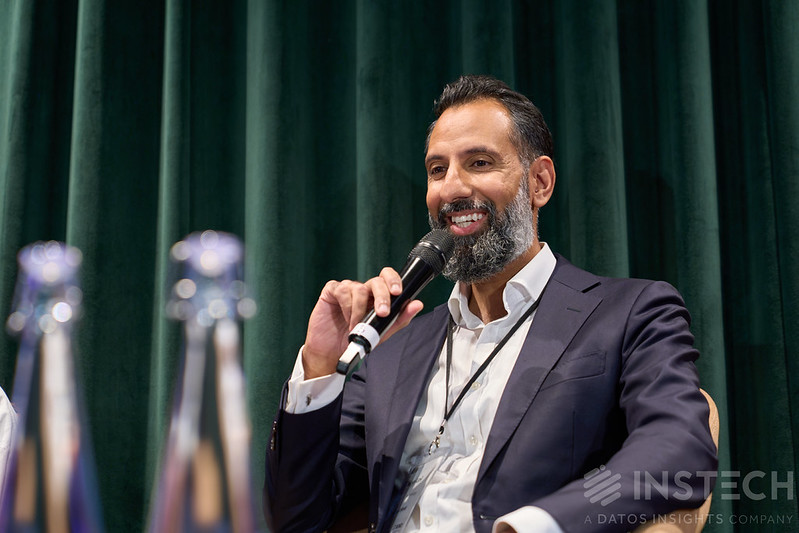
Before, underwriters chased piecemeal submissions, logged into separate systems for clearance and sanctions, then keyed everything into a rater. That was three to four hours of work spread across several few days, and not economical to write the lower end of the book. The pilot project got the journey down to seconds, which included:
- Submission data arrives by API from the broker's platform
- Data integrity checks run
- Automated clearance and third-party sanctions checks complete
- The rules engine tests the risk against appetite and business rules
- The rater prices it and a quote goes back to the broker, with the option to bind straight into the policy administration system
Anything outside the rules is sent back to the broker or referred to an underwriter. As a non-AI pilot, the system is rules-based by design. Underwriters set the rules and the referral points, so responsibility for decisions stays with them.
Rating, APIs and the broker gateway were built as reusable components, and that is paying off. The pilot is not optimising existing business, but new business The Hartford was not writing before. It took around nine months from contract to go-live, and the next product is taking 10 weeks, with the expectation the third product will take even less.
The lessons learnt were practical. Kate recommended keeping data requirements to the minimum needed to rate and to think harder up front about referral thresholds, as around half of quotes fell within appetite but most were still referred.
What we took away
Every speaker drew the line between commodity and differentiation in roughly the same place. Insurers want to own their underwriting judgement, not the machinery that moves a risk to the ledger.
The principle is that the decision rights stay human, whether that means Torch’s technology team designing for them or The Hartford's underwriters setting every rule and referral point. Orchestration is what lets that principle hold at scale.
And the advantage goes to the insurers that learn fastest from their own book, from Andy's downstream data to Jon's case for tighter feedback loops. Connecting the islands of automation is how they get there.
For a deeper look at the Underwriting Orchestration Engines, read InsTech's report here.
If you're working out what comes after your own pilot, we'd love to chat.
- Industry Events
Related Resources
Underwriting Resources
Underwriting Maturity Framework: Moving from a process-driven to a data-driven operating model
Grow your delegated underwriting