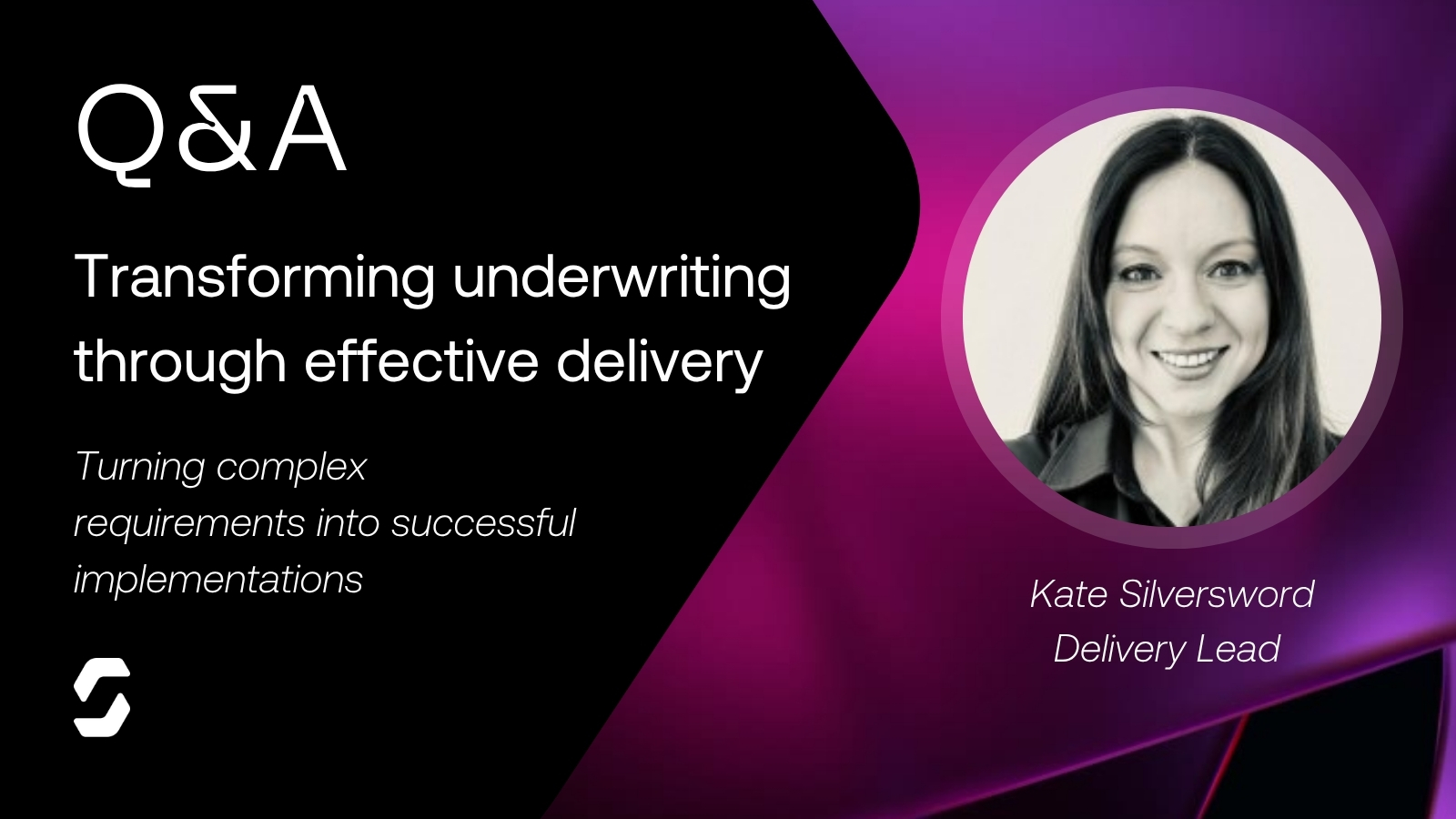
Send Q&A with Kate Silversword, Delivery Lead for underwriting implementations
Turning complex underwriting requirements into successful implementations with Kate Silversword.
In this edition of our Q&A series, we speak with Kate Silversword, Delivery Lead for Underwriting Implementations at Duck Creek Technologies, about what it takes to turn complex underwriting platform requirements into successful implementations. Drawing on 25 years of customer-side experience, she discusses balancing agile delivery with fixed milestones, engaging underwriters and creating an end-to-end policy journey. Kate explains why successful implementations rely not just on technology, but also on clear alignment, collaboration and an understanding of customer needs.
What does your day-to-day role as Delivery Lead for underwriting platform implementations involve?
As Delivery Lead, I’m responsible for taking underwriting implementations from discovery right through to go-live. Day to day, that involves planning implementation, working with underwriters to understand their needs, and translating the requirements into a clearly defined project scope and delivery plan.
I also take a proactive approach to identifying risks and potential issues, resolving blockers, and making sure everything stays on track. A big part of my day-to-day role is keeping the customer, our technical and functional teams, and our SI partners aligned, so everyone understands their responsibilities and next steps.
What attracted you to Send and the opportunity to be heavily involved with underwriting platforms?
I’ve spent 25 years in delivery across IT and business operations in insurance and banking, always on the client side. I wanted to get closer to software development, which is what attracted me to Send. As a small company, it offered the opportunity to help shape the business and its ways of working in a more agile, innovative environment.
Now that Send is part of Duck Creek, I see an opportunity to build on that and contribute on a bigger scale. I’m still passionate about developing underwriting platforms, and I think my customer-side experience helps me understand insurers’ real-world challenges and bring that perspective into product development and advising clients when implementing software.
How has your previous experience working on the customer side shaped the way you run implementations now?
Having worked on the customer side really helps me put myself in the customer’s shoes and understand what they need. I know what information is important to them, and I can help translate the technical side of things into something that makes sense from their perspective.
It’s about being able to empathise with the customer and knowing what questions they may have in their minds. How would I react to this? How would I want to use this? What information would I need? That allows me to have the right conversations early on, address any concerns before they arise, and make sure the customer has all the information they need throughout the implementation.
What makes the Orchestration Engine stand out from others on the market?
Configurability is key. Send’s Orchestration Engine is built on a core platform with a configuration layer, which means we can adapt it to each customer’s specific needs.
It also manages the workflow and information from submission to quoting right through to bind, which is often the missing piece in policy administration systems. It works really well alongside and complements existing systems.
I also think it’s the team and our approach to customer relationships. We’re focused on delivering the best outcomes and supporting them throughout the journey, rather than just focusing purely on the commercial side.
What benefits does Send joining Duck Creek bring to customers?
For our existing customers, they will see continuity with the same platform, the same team, the same people they know and trust.
The big benefit is connecting Send’s Orchestration Engine with Duck Creek’s core policy administration system. We can create a much clearer path from submission through to bind. Previously, customers would often ask us to help bridge the gaps in their processes, particularly where they didn’t have a reliable policy administration system in place. Now, we’re able to offer the full solution and offer that end-to-end journey that covers the whole lifecycle of the policy.
Which delivery methodology works best for insurance platform implementations, and why?
I’d say a hybrid approach works best. From a commercial and contractual perspective, you need fixed milestones like discovery, user acceptance testing (UAT) and go-live, particularly when you’re managing dependencies on other systems or underwriter availability.
But from a technical perspective, sprints work really well. They allow you to get moving quickly after discovery, build on requirements in the given time frame and get regular customer feedback. Overall, it’s about combining the structure of fixed milestones with the flexibility of agile delivery.
What separates a successful go-live from one that doesn’t stick?
A successful go-live starts with getting the business involved from day one. When underwriters have been in discovery and tested in UAT themselves, they’ve helped define the product that will work for them after go-live. If the system is imposed on them, they’ll often find workarounds within weeks.
It’s also important to have the right change management in place, with change champions who can guide users through new processes, answer questions and build confidence in the system.
What is the biggest challenge you encounter when helping customers define their requirements for an underwriting platform implementation?
There are two main challenges.
The first is being realistic about requirements and defining the right MVP. With a first implementation, it’s about understanding what the business really needs to get value quickly, rather than trying to deliver everything all at once. The more requirements you add, the longer the implementation takes, so it’s important to prioritise what will make the biggest difference from day one.
The second is not underestimating the amount of testing needed. Thorough UAT is essential to make sure the platform works as expected and delivers what the business actually needs. It also helps users become familiar with the system, get their questions answered and build confidence before go-live.
What advice would you give to a customer starting an underwriting platform implementation today?
My biggest piece of advice would be to get aligned internally before the project starts. Be clear on what you want to achieve, what your business really needs and what will deliver the most value. That way, when we start defining requirements and looking at the platform, you have a clear direction from the outset. The earlier you have those conversations internally, the smoother the implementation is likely to be.
What are you most excited about working on over the next year?
I’m most excited about the opportunities that bringing Send and Duck Creek together creates. Combining Send’s Orchestration Engine with Duck Creek’s core systems means we can get involved in a wider range of implementations and support customers across the entire end-to-end policy journey.
I’m also really excited about exploring the AI roadmap and how we can use that to deliver even more value for our customers.
- Team Spotlight
Related Resources
Underwriting Resources
Underwriting Maturity Framework: Moving from a process-driven to a data-driven operating model
Grow your delegated underwriting