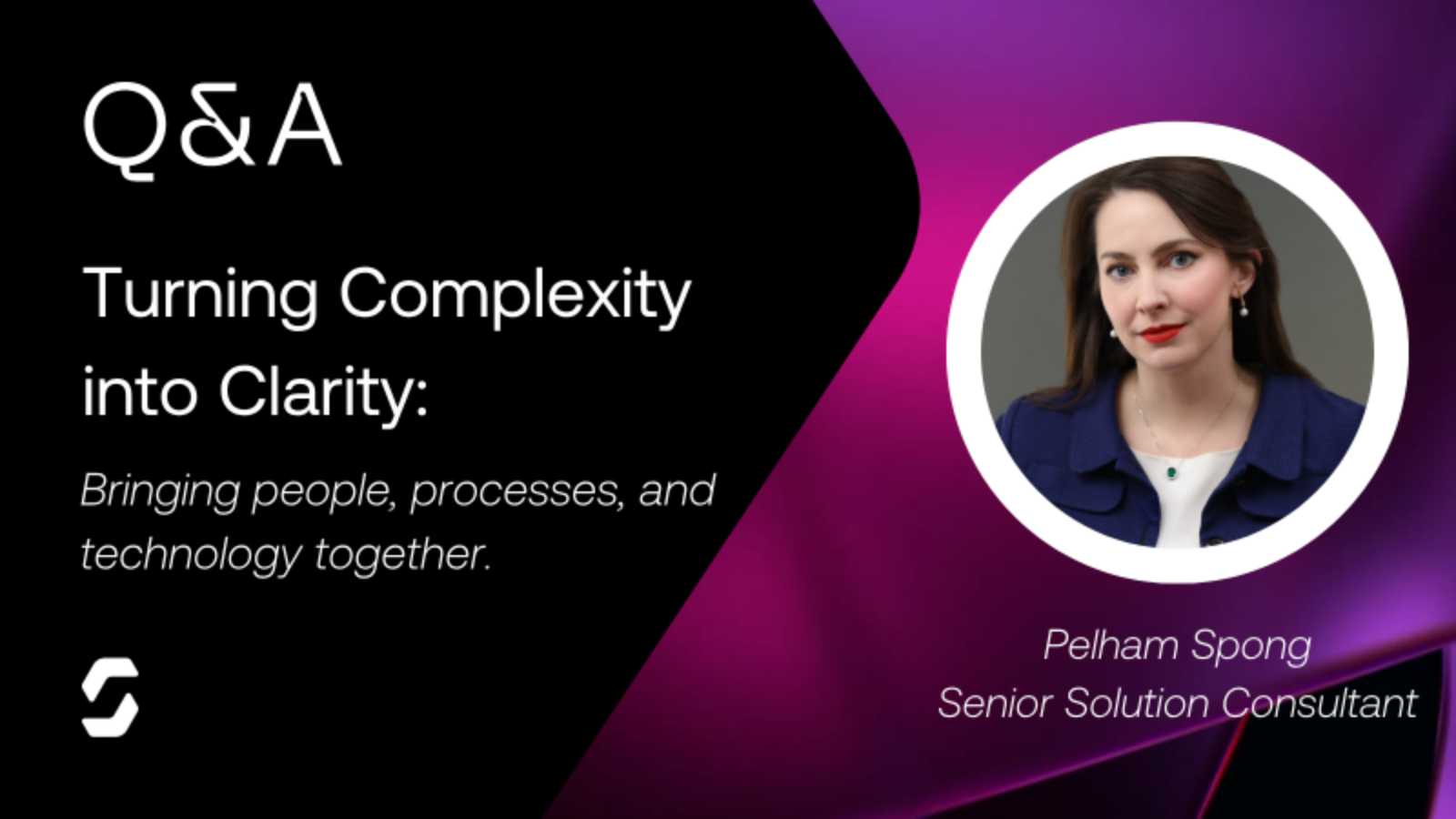
Send Q&A with Pelham Spong, Senior Pre-Sales Consultant
What attracted you to Send and the opportunity to help expand the business into the North American market?
I’ve spent more than a decade in the Insurtech industry, primarily focused on policy administration systems in the P&C space. Throughout that time, I started increasingly hearing the same questions from carriers around underwriting workbench capabilities, AI integration, and submission ingestion workflows.
When I was introduced to Send, what immediately piqued my interest was their offering directly addressed many of those challenges. I could see there was a real need in the market for what Send was building. At the same time, the company culture reminded me of a previous startup experience I absolutely loved, so it felt like the right fit professionally and personally.
I was also excited by the opportunity to bring my experience growing teams and supporting companies moving upmarket into a business that was expanding from the UK into North America. Having experience across both North American and European markets has been incredibly valuable as Send continues to grow internationally.
As a Senior Pre-Sales Consultant, what does a typical engagement with a carrier or MGA look like for you?
Most engagements start with discovery conversations where I’m learning about the carrier’s or MGA’s pain points, workflows, and operational challenges. From there, we move into demonstrations that are tailored to reflect their specific business needs.
What’s interesting is that these conversations almost always evolve. A client may initially come in focused on one area, like ingestion, but once they begin seeing what’s possible, they start envisioning opportunities across the broader underwriting workflow, whether that’s downstream processing, automation, or AI integration.
Typically, these engagements involve multiple demos, follow-up discussions, and deeper workflow conversations over the course of one to two months as we build a relationship with the business, technical and leadership teams.
What are some of the biggest operational challenges you consistently see across the market?
One of the biggest challenges I see is operational fragmentation. Many underwriting teams are still touching numerous systems, portals, spreadsheets, and manual workflows just to get a quote out the door.
A lot of underwriters are essentially “Frankensteining” workflows together using Excel, Outlook, SharePoint, and multiple external systems. That creates a huge time drain and forces them to spend more time on cleanup and administrative work than on the actual underwriting analysis itself.
I also see a lot of friction caused by siloed information and disconnected processes. Teams have built complicated manual workflows over time, so one of the biggest opportunities is helping them envision what work could look like if everything lived in a single workspace instead.
One of the most rewarding parts of my role is showing underwriters how much more time they could spend focusing on underwriting decisions rather than operational busywork, as are the relationships we build in this process.
From your perspective, where are insurers still struggling to turn AI investment into real operational value?
I think a lot of insurers are still approaching AI with the mindset of “we need AI everywhere” without fully thinking through how it fits operationally into their workflows and reporting requirements.
AI absolutely has long-term value in underwriting, but I think the more important question is not just what AI can do, but what it should do within the context of the organization’s broader strategy?
The most successful approaches I’m seeing involve thoughtfully weaving AI into specific parts of the underwriting workflow where it can create measurable value. For some carriers, that’s using AI at the front end to filter out submissions that may be out of appetite. For others, it’s applying AI deeper into underwriting workflows to analyze loss runs, identify red flags, or support pricing decisions.
That’s where orchestration becomes so important. It allows insurers to apply AI where it makes the most strategic sense for their business instead of forcing a one-size-fits-all approach.
How does Send help insurers modernize underwriting without creating additional complexity for underwriters or IT teams?
For me, modernization starts by reducing complexity, not adding to it.
Today, underwriters are constantly moving between systems to gather information and complete tasks. By bringing workflows, data, and automation into a single workspace, Send helps eliminate many of those manual touchpoints and repetitive processes.
It also reduces the burden on IT teams, who are often responsible for maintaining complicated integrations and custom workflows between legacy systems, portals, and PAS environments. Instead of building more layers of complexity, Send helps streamline and simplify the overall workflow.
What separates organizations that are truly ready for modernization from those still stuck in pilot mode?
The organizations that are most successful with modernization are the ones that have buy-in across the business, especially from their underwriting teams.
One of the biggest challenges I see is when transformation is treated purely as a technology initiative instead of a workflow evolution. Underwriters can get understandably focused on replicating every button or process from their current system instead of stepping back and asking how the workflow itself could improve.
The organizations that move forward successfully are willing to document and rationalize their rules and workflows while remaining open to rethinking how work gets done in a modern system.
A challenge you’re proud of?
As the business scaled, our release process started to show strain. One of the biggest issues was inconsistency in how applications and configurations were versioned, which made releases harder to track and less predictable.
I worked on redesigning the pipelines to introduce a more structured versioning approach and a clearer staged release process. The goal was to make it obvious what was going live and reduce room for error.
I worked closely with another lead on the build and software side to streamline the process and remove bottlenecks without adding complexity.
The result was a much smoother release flow. Build times dropped by around 37%, but more importantly, releases became more predictable and far less stressful for the engineers using them.
What’s been most exciting about helping scale Send’s pre-sales capabilities as the company grows in North America?
One of the most exciting things has been seeing how flexible Send’s platform is within the North American insurance market.
Because the platform wasn’t originally built with a North American mindset, it actually avoids some of the rigid constraints you often see in traditional North American underwriting solutions. That flexibility allows us to adapt functionality in really creative ways for carriers and MGAs across the US and Canada.
I’ve especially enjoyed seeing how some of Send’s existing capabilities, like our DUA functionality, can help serve areas of the market that are still significantly underserved in North America.
How has your previous experience influenced your approach to pre-sales?
Before entering Insurtech, I worked as an actress, and honestly, a lot of those skills still shape how I approach pre-sales today.
Acting taught me the importance of storytelling, empathy, and human connection. In pre-sales, I’m not just demonstrating software. I’m helping underwriting teams visualize a different way of working and immersing themselves in what’s possible for their business.
I also genuinely love the energy of live interaction. One of the best parts of my job is being face-to-face with underwriters and business users, listening to their challenges, and translating those conversations into demonstrations that help them feel heard and understood.
What’s something your colleagues might be surprised to learn about you?
Outside of work, I’m deeply involved in advocacy efforts supporting survivors of abuse and pushing for greater accountability and safer environments for women.
It’s something I care deeply about, and I’ve worked alongside government agencies, lawmakers, nonprofits, and advocacy groups to help drive awareness and meaningful change. I believe using your voice and platform to support others can make a real difference, both inside and outside the workplace. One voice can empower many others.
What’s one trend in commercial and specialty underwriting you think the industry should be paying closer attention to?
I think the industry is continuing to move toward bringing underwriting workflows, data, and decision-making into a single view.
Underwriters spend far too much time navigating operational busywork instead of focusing on the actual underwriting decisions that matter most. I think there’s going to be increasing demand for platforms that help streamline fragmented workflows and allow underwriting teams to spend more time evaluating risk and less time managing process.
Connect with Pelham on LinkedIn here.
- Team Spotlight
Related Resources
Underwriting Resources
Underwriting Maturity Framework: Moving from a process-driven to a data-driven operating model
Grow your delegated underwriting