INFUSE Recap: Polycrisis unpacked: Why insurers must evolve to survive
It’s official. Insurers are in the era of a polycrisis. From climate change and geopolitical volatility to supply chain shocks and economic disruption, today’s risks are deeply interconnected and evolving fast.
So, how is the industry navigating the complexity of risk in 2025?
During the sixth episode of Send’s INFUSE webinar ‘Welcome to the era of Polycrisis’, the panelsist unpacked the Polycrisis situation with a fresh perspective. Dean LaPierre, CUO at Cross Cover Insurance, argued that there is unnecessary noise about the polycrisis and was confident that the industry has handled these perils before and will do so now as well. Ina Bajrami, Financial Risk Manager at Apollo indicated that although the Polycrisis wasn’t new, the old ways of assessing risk in silos will simply not cut it anymore and the interconnected nature of risks calls for a unique approach. Neal Croft, Independent Global Client Relationship and Strategy Lead, called the industry to have deeper partnerships between brokers, insurers and clients that will not just reduce losses but prevent them in the first place.
If we’ve seen these risks before, then why does it feel overwhelming to manage them now? Is the risk landscape genuinely evolving into something we’ve never encountered, or is it just a scare? The following is a sharp, honest, and forward-looking take on the polycrisis by industry insiders that challenges conventional thinking about risk in 2025.
What is the Polycrisis and is it new?
Risk has never been this complex before. Underwriters today are facing a compounding effect with multiple crises occurring concurrently, making risk assessment extremely challenging. However, panelist Dean LaPierre feels the current situation may not need this kind of panic. “Have we seen geopolitical tension, inflation, and natural disasters before? Absolutely. What’s changed is the noise-to-signal ratio.” he said.
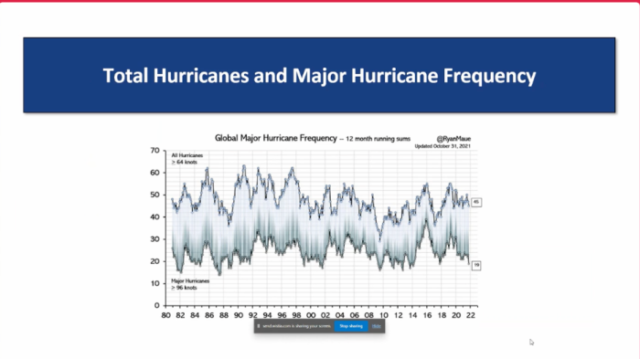
Dean feels that today’s natural disaster information can distort the perceived severity or novelty of risks. He validated this argument by presenting data on hurricane frequency. The diagram showed no significant rise in hurricanes over time, even as public perception suggests otherwise. But for others on the panel, the scale and speed of the current risks are what make them tricky to handle. Refer to the diagram below.
Ina feels that inflation and supply chain issues aren’t new, but their interconnected nature and how fast they cascade demand new thinking. She calls for innovation and new approaches in underwriting.
Innovation needs to become part of underwriting culture. That means identifying blind spots, encouraging new ideas, and evolving how we look at risk.”
-Ina Bajrami, Financial Risk Manager, Apollo
Insurers must say goodbye to static underwriting
According to panelist Neal Croft, VUCA- Volatile, Uncertain, Complex, Ambiguous perfectly describes the polycrisis, where risk no longer acts in isolation. Going forward, Insurers will be forced to consider second and third-order consequences and not just the immediate threat. For underwriters, this means saying goodbye to static pricing models and embracing more dynamic real-time strategies. The panel collectively agreed that underwriting will rely on high-quality data, custom workbenches, and intelligent tools to write better and more profitable business. Neal specifically suggested that to stay competitive, insurers must embrace continuous, real-time underwriting powered by high-quality data, scenario modeling, and adaptive decision-making tools. This shift isn’t just operational, it’s cultural. It requires a mindset that values proactivity over reactivity, and insight over assumption.
“Innovation is non-negotiable. You can’t afford to stand still as the world keeps shifting. Keep adapting or risk falling behind.”
-Neal Croft, Independent Global Client Relationship and Strategy Lead
Crisis in Insurance means new opportunities
In an era defined by volatility and complexity, the insurance industry faces a pivotal choice: keep reacting to risk as it happens or get ahead of it.
Despite the challenges, all three panelists see today’s Polycrisis as a catalyst for innovation. Neil highlighted the industry’s shift toward more protective models where the goal isn’t just indemnifying losses but helping prevent them in the first place. This means deeper partnerships between brokers, insurers, and clients, especially in areas like cyber, climate, and geopolitical risk. Meanwhile, Ina pointed to the rise of parametric insurance and the real-time tracking of assets as prime examples of how tech and data are transforming underwriting. “If you’re not adapting now, you risk falling behind,” she warned.
“Elevated risk creates need, need creates innovation, and innovation creates business. My firm and many others have launched or grown during turbulent times.”
-Dean LaPierre, CUO at Cross Cover Insurance
As the webinar closed, the panelists shared their final thoughts on tackling the Polycrisis.
- Ina Bajrami said that change is often reactive but transformation is proactive. She urged the industry to be strategic and stay ahead of the curve
- Neal Croft suggested that winners will be those who use innovation and information intelligently.
- Dean LaPierre reiterated that the markets are resilient and insurers must focus on filtering out the noise, checking biases, and allowing the market to do what it does best, which is transfer risk.
The polycrisis may be overwhelming, but it also brings with it tremendous potential. The insurance industry has weathered many storms before. What’s different today is how quickly risks evolve and how rapidly underwriters must respond.
Resilience isn’t about avoiding complexity. It’s about embracing it with clarity, curiosity, and the right tools to navigate the risks.
Keen to learn more? You can watch a recording of the webinar here.
- Insights
Related Resources
Underwriting Resources
Underwriting Maturity Framework: Moving from a process-driven to a data-driven operating model
Top 10 insurance industry trends shaping underwriting in 2026
